

(574) 363-0689Leave a voicemail about your project

KNOW WHAT TO EXPECT

Will raising the concrete solve the water problem?

Slab height and water movement belong in the same assessment. Raising concrete may change how water crosses the surface, but it does not guarantee that ponding or water intrusion will stop. Identify the intended improvement and any separate drainage work before choosing a repair.

Request an estimate
Practical repair optionsWritten scopeLocal planning
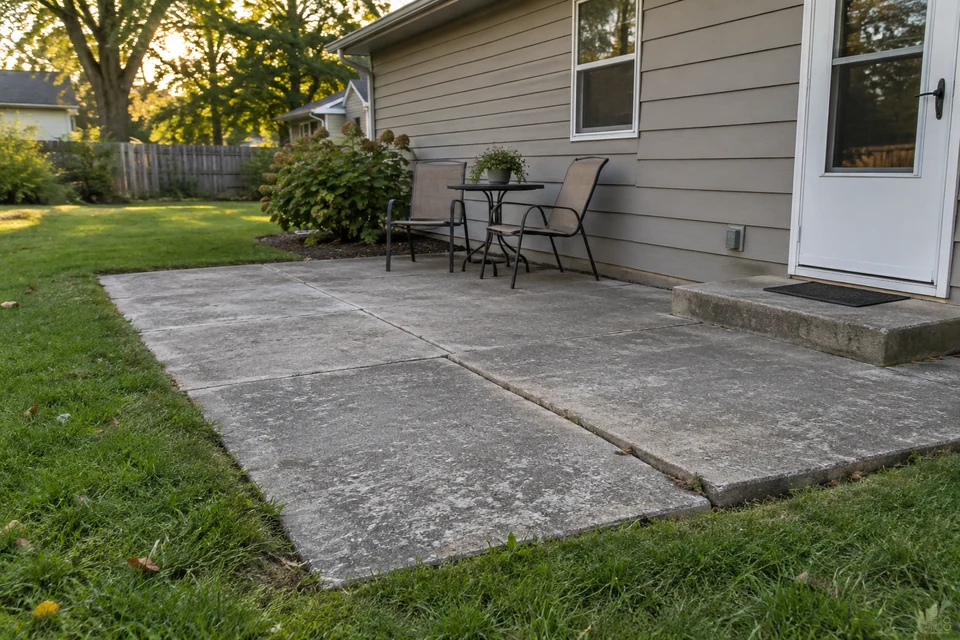
Weathered concrete patio panels with a small uneven joint beside a backyard door and lawn.

Existing concrete. Clearer repair decisions.

01

How are height and water movement related?

Slab height, neighboring surfaces and water movement should be assessed together. Ponding or water at a doorway does not point to a single cause, and lifting alone does not install drainage or guarantee that water problems will be cured.

02

What observations should you share?

  • Where water appears after rain or regular use, and which slab or doorway it reaches.
  • Accessible photos of the affected area, taken from a safe position.
  • Whether water seems to pool, run toward the building or stay near the slab edge.
  • Stay out of unsafe areas, and do not try to diagnose unseen pipes.
03

What belongs in the written plan?

  • What the proposed lift is intended to change in the slab's height or level.
  • Which water issues may remain after the lift, so you are not surprised later.
  • Whether drainage installation, plumbing or structural repairs are needed, and if so, how they would be scoped separately.

ONE CLEAR NEXT STEP

Make the next step
a more even one.

Start with the affected concrete and your ZIP code. Compare suitability, method and scope for the actual property.

Request an estimate ↗
Sources and local planning resources

Reviewed October 26, 2026. Confirm slab suitability, local requirements and the written repair scope for the actual property.

(574) 363-0689Leave a voicemail about your project
Request an estimate